


Search this Website
Elsewhere Fine by Karl Dimer
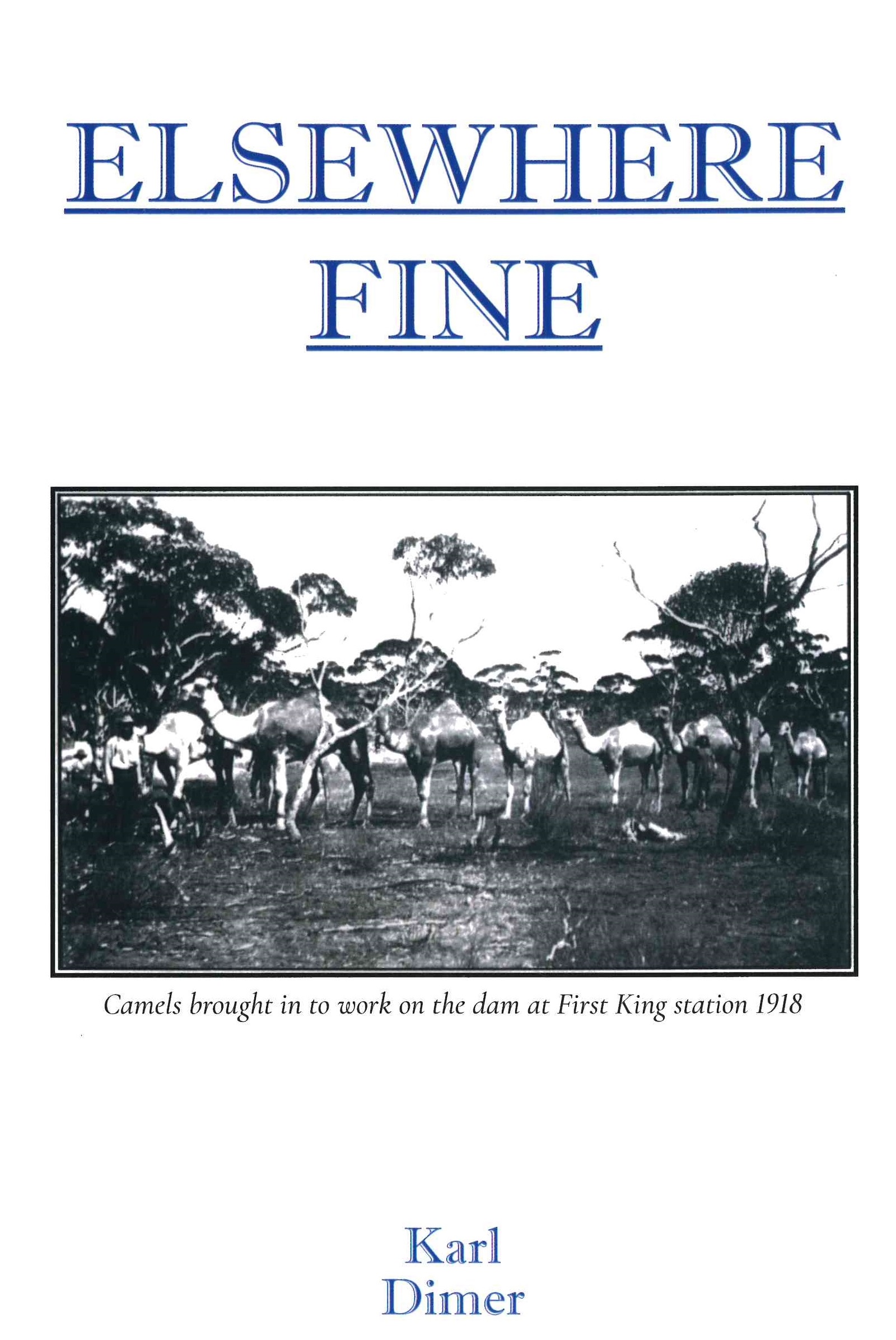
Outline of Story by Jenifer Edols. 11.06.1987.
The story is told by Karl Dimer (now living in Kalgoorlie, aged 73) and commences with the exploits of his father, Heinrich Dimer who, when 18 years old, left his home in Germany and migrated to the United States of America in 1879. For two years, he worked as a master butcher, having been trained by his father. After two years in the States, Dimer decided to see more of the world, and joined a whaling ship, the Platina. Life on the whaler was hard, and after a further two years, Heinrich decided to 'jump ship' in Albany, Western Australia.
With nothing more than a few personal possessions tied on top of his head, he swam ashore, landing on a lonely beach. With another man, Heinrich was taken and hidden by a well known local pastoralist from the searching authorities, as jumping ship was considered a very serious crime. Subsequently, Dimer worked for this man for a year, doing a variety of things, from shearing to fencing.
In 1885, Heinrich started working for another pioneer of the Israelite Bay area, working mainly as a shepherd. From these beginnings Dimer learnt something about the conditions of the country, especially of the climate and the unreliable nature of the rainfall. Unafraid to try his hand at anything, Dimer ultimately took up large areas of leasehold land between the present Eyre Highway and the Great Australian Bight, on the edge of the Nullarbor Plain, calling the station Nanambinia.
Heinrich Dimer had nine children, (Karl, the writer of the family history being the sixth son) and they all worked with their parents to develop the property, clearing the permitted areas for fodder crops growing their own vegetables and fruit, building the house, shearing shed and numerous other buildings, as well as fencing large areas of the virgin country, and throughout the years, combatting drought, dingoes, foxes and rabbits.
The use of aborigines as shepherds and stockmen, the close friendships established with many of these people, as well as with the various neighbours, reflects clearly the pioneering and caring spirit of the people of that time.
When the father (who was an absolute patriarch) died, there was a bread ultimately Nanambinia was owned by a younger son, Karl, but du
OUR SPONSORS


